
How Many Days Do You Need in Namibia? (And Can You Do It in 7?)
A Note About Driving Times
The discussion below uses distances and estimated driving times to explain how long it can take to travel between destinations in Namibia. These estimates are planning tools, not targets to beat.
At TripPace, we recommend treating four to five hours of planned driving as the longest driving day to build into an itinerary—and avoiding driving days of that length back-to-back. Some of the longer routes discussed below illustrate why adding another region can dramatically change an itinerary; they are not recommendations to cover those distances in a single day.
A 600-kilometre journey on paved roads is very different from covering the same distance on rough, corrugated gravel. Nor should arriving after dark become the fallback when a drive takes longer than expected.
Please do not assume that driving faster, driving longer or continuing after dark will allow you to squeeze another destination into an already full itinerary. Namibia rewards realistic itineraries built around safe speeds, daylight travel and enough time to enjoy the journey.
Not sure whether your route works? Our free Pace Check tool can help you understand what a realistic Namibia itinerary looks like.
Yes, Namibia can absolutely be visited in seven to ten days. Whether it should be depends on your travel style, what you want to see and experience, how much time and money you have, and how comfortable you are with long driving days.
This is not an argument that everyone needs at least two or three weeks. A seven-day trip to Namibia is infinitely better than potentially waiting years to create a longer itinerary. If seven days is what you have, go for seven days. See what you can, enjoy it properly and come back for the rest.
Namibia has a habit of earning a second visit—and sometimes a third. On our first trip, we discovered adventures we wanted to return for and places we simply wanted to give more time.
Rather than tell you how long your trip should be, we want to show you what changes as an itinerary grows from seven days to two weeks, three weeks and beyond. More time can mean seeing more, but it can also mean driving less, staying longer and leaving room for moments you could never plan.
Start Counting Before You Arrive
Before choosing the length of your itinerary, consider how long it will take to reach Namibia.
A direct flight from Frankfurt to Windhoek takes a little over ten hours. Travellers arriving from elsewhere in Europe may need a connection before that journey begins. From North America or Australia, travel often involves one or two connections and can take 24 hours or more.
Then there is jet lag. Travellers from much of Europe have relatively little time-zone adjustment, but those arriving from farther away—or travelling with children—may need a day or two before everyone is ready for an early start and a long drive.
That does not make your arrival day unusable. It does make collecting a vehicle, learning how everything works, buying supplies and immediately beginning a long drive less appealing.
The farther you travel to reach Namibia, the more sense a longer itinerary may make. Not because a shorter visit is unworthy, but because international travel consumes time and energy at both ends of the trip.
Namibia's official tourist arrivals statistics recorded an average intended stay of 13 nights in 2025 (down slightly from 14 in 2024). An average cannot decide the right length for your trip, but it helps explain why many first-time self-drive itineraries settle somewhere around two weeks.
Distance Is Only Half the Story
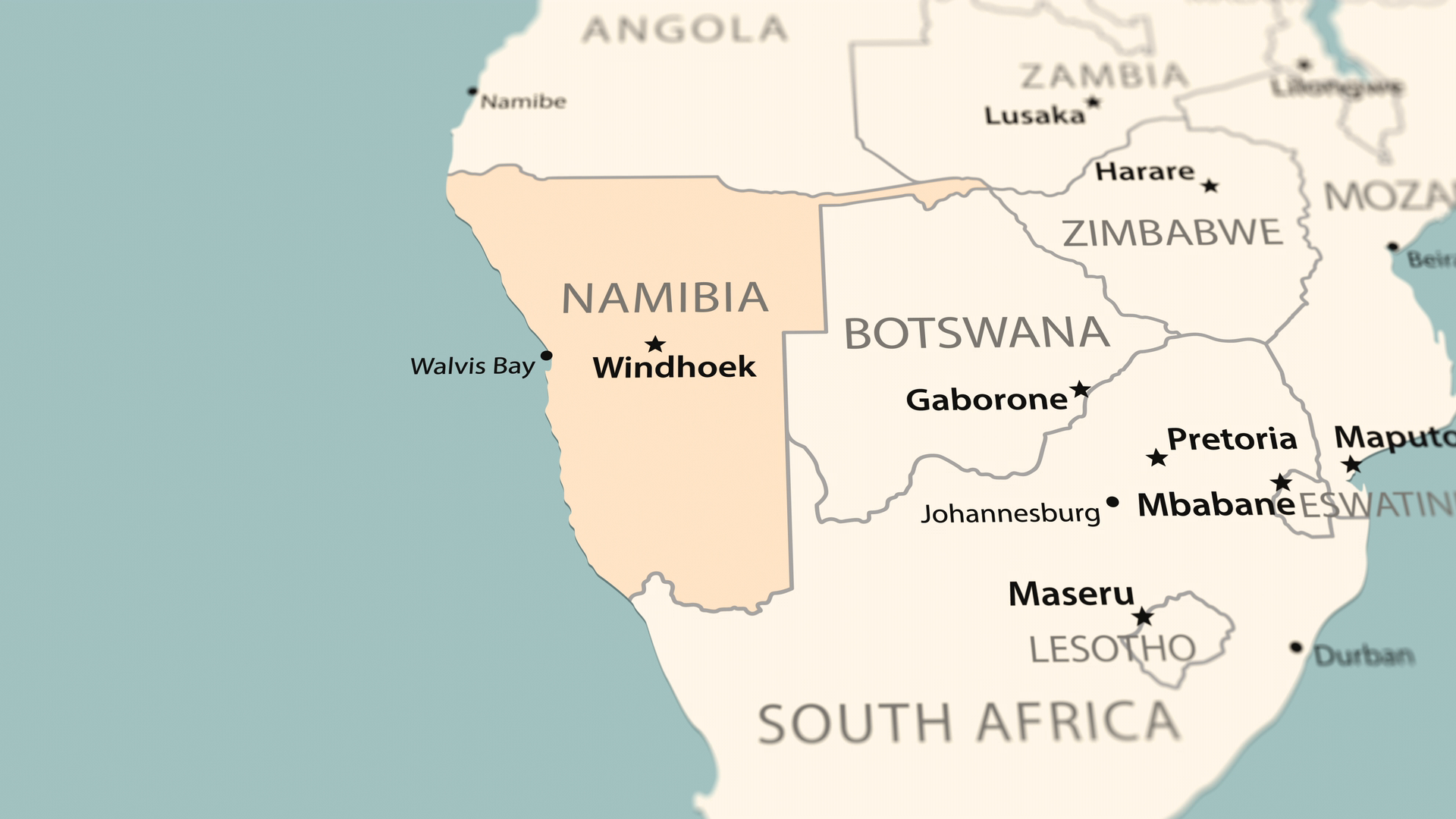
Namibia covers more than 824,000 square kilometres—slightly more than mainland France and the United Kingdom combined. On a map, the classic destinations form what looks like a manageable loop. On the ground, they are separated by long stretches of paved and gravel road.
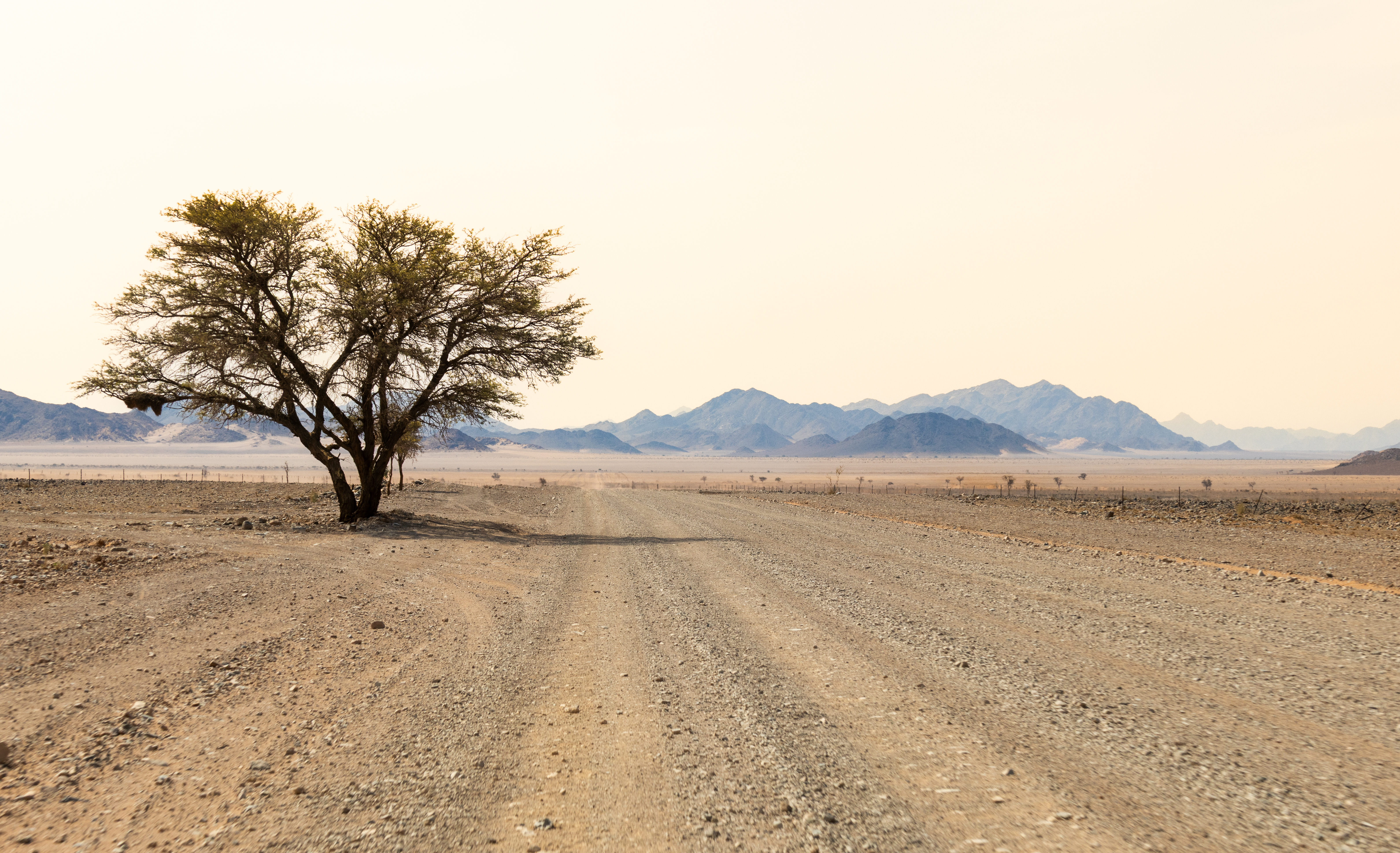
The important number is not only the distance. It is the time you allow yourself to drive it.
Two hundred kilometres can easily take four hours or more if road conditions are slow, the scenery is particularly good or you simply allow Namibia to add things to your schedule. A 300-kilometre journey can occupy much of a day once you include fuel, lunch, viewpoints, wildlife sightings and the occasional stop because the landscape has changed yet again.
In Namibia, the drive is often a large part of the destination.
The journey might take you through a mountain pass, across open gravel plains and along a dry riverbed before you reach the place named on your booking. Those landscapes are not empty kilometres to be cleared as quickly as possible. They are part of what you came to experience.
Some of the best memories are made when you step out of the vehicle for no particular reason. You find a safe place completely off the road, pour a coffee or water and spend fifteen minutes surrounded by Namibia in all her glorious space and silence.
No pre-departure itinerary can tell you where that stop will happen. You still need to leave room for it.
7–10 Days: A Focused Introduction
Seven to ten days is enough time for a memorable introduction to Namibia. The key is accepting that you will need to prioritise.
For many first-time visitors, a shorter itinerary follows a version of the classic route: Windhoek, Sossusvlei, Swakopmund and Etosha National Park before returning to Windhoek. That combination includes the dunes of the Namib, the Atlantic coast and some of Namibia's best-known wildlife viewing.
It also involves a lot of road.
Windhoek to the Sossusvlei area is roughly 320 to 380 kilometres, depending on the route, and generally takes four and a half to five and a half hours with stops. Sossusvlei to Swakopmund is approximately 350 kilometres and another five- to six-hour journey. Swakopmund to southern Etosha via Andersson Gate is around 500 kilometres and can take six to seven hours. Andersson Gate back to Windhoek is approximately 420 kilometres and around five hours on predominantly paved roads.
In seven days, those drives occupy a large portion of the trip. In ten days, the route becomes more comfortable, but you will still need to decide where your time matters most.
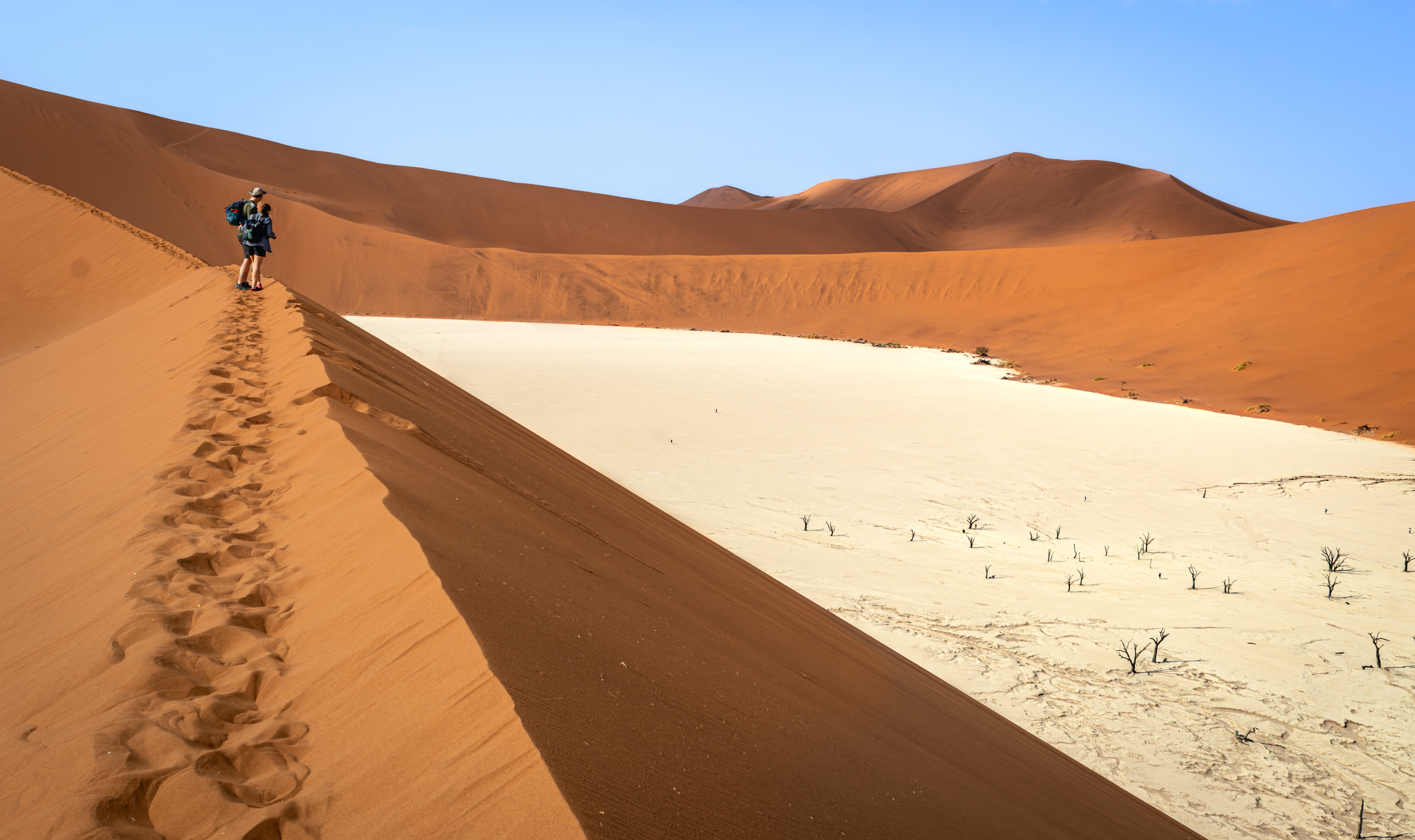
A second night near Sossusvlei gives you a full day among the dunes. Another night in Swakopmund creates time for an activity without arriving one afternoon and leaving the next morning. An additional day in Etosha means another game drive and another chance to sit quietly at a waterhole.
The advantage of a shorter itinerary is focus. The disadvantage is that delays and spontaneous decisions have a larger effect. A slow road, a puncture or an irresistible roadside coffee stop can place pressure on an already full day.
The answer is not to skip Namibia because you only have a week. It is to choose what matters most and be realistic about how much Namibia fits inside that week.
11–14 Days: The Itinerary Begins to Breathe
Adding three or four days does more than create space for another destination. It changes the rhythm of the trip.
The classic route can expand through Damaraland rather than travelling as directly as possible from Swakopmund to Etosha. Depending on your interests, that might include Spitzkoppe, Brandberg, Twyfelfontein or more time among the landscapes of the Kunene Region.
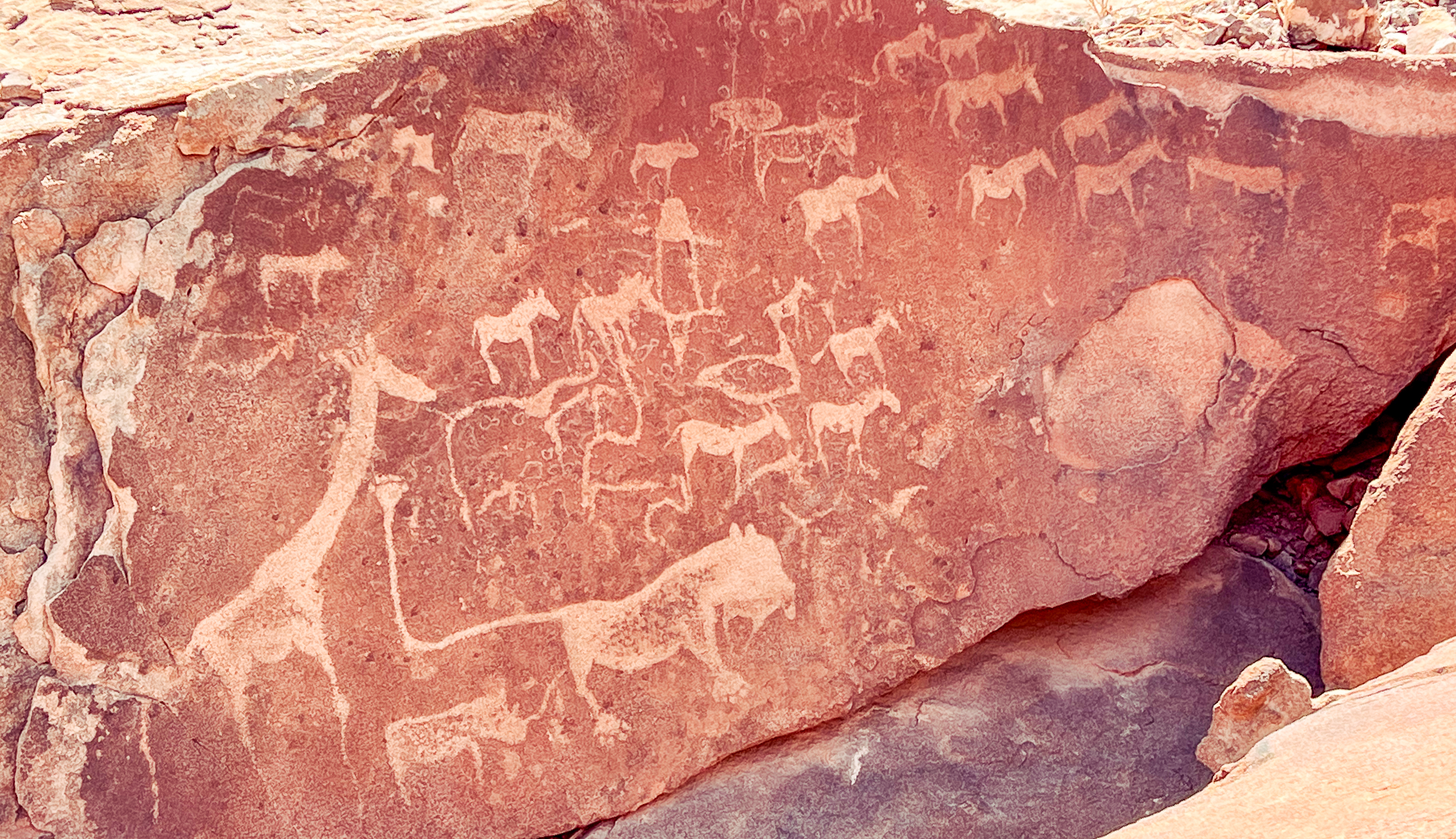
Swakopmund to the Twyfelfontein area is roughly 410 kilometres and can take five to six hours or more. From Twyfelfontein to southern Etosha is approximately 290 to 350 kilometres and another four- to five-hour journey, depending on your accommodation and route.
Two weeks also makes longer stays easier. You can spend two nights near Sossusvlei, two or three nights in Swakopmund and several nights around Etosha without every additional night forcing something else off the itinerary.
This is where the trip begins to breathe. A roadside stop does not immediately threaten your arrival time. Lunch can take longer than expected. You can stop for a photograph without calculating what those five minutes will cost later.
The advantage of 11 to 14 days is balance: more places, longer stays and fewer rushed transitions. The danger is assuming that two weeks makes the entire country possible. Add the far south, the northwest and the Zambezi Region, and a relaxed itinerary quickly becomes another race.
Fourteen days offers breathing room—if you let it.
15–20 Days: More Places or More Time?
With 15 to 20 days, you can decide whether you want to see more of Namibia or experience your existing route more deeply. This was the length of our first two trips because it matches our travel style and what we wanted to experience.
You could travel farther into Damaraland and the northwest, include Palmwag or spend more time along the Skeleton Coast. You could add nights at smaller game reserves and guest farms, extend your stay in Etosha or simply stop moving every second morning. That was a major part of the appeal for us.
You could also build the south into the route. Windhoek to the Hobas area near Fish River Canyon is approximately 640 kilometres and a full seven- to eight-hour travel day once you include breaks. Most of the journey is paved, with gravel on the final approach depending on your route and accommodation.
From the Fish River Canyon area to Lüderitz can be roughly 425 to 500 kilometres, depending on where you begin, and generally takes around six hours with stops. Continuing toward Sossusvlei creates another long journey of approximately 425 to 500 kilometres.
The south can fit into a 15- to 20-day itinerary, but it is not a casual addition. It changes the shape of the trip.
More days do not make Namibia smaller. They give you more ways to divide the distance. Damaraland no longer needs to be somewhere you pass through on the way to Etosha. Swakopmund can become more than a coastal pause. A game drive does not need to produce every hoped-for sighting before sunset because you can return tomorrow.
The main advantage is flexibility. The main disadvantage is temptation. Twenty days sounds generous until every place you have ever seen in a Namibia photograph finds its way onto the same map.
A three-week itinerary can be wonderfully relaxed or remarkably frantic. The distances, destinations and travel pace decide which one it becomes.
20+ Days: Leaving Room for Namibia
Beyond 20 days, more distant regions become realistic without every day being devoted to reaching them.
The Zambezi Region, for example, can become a natural extension beyond Etosha. From Namutoni in eastern Etosha to Rundu is approximately 415 kilometres and around five hours without extended stops. Rundu to the Kongola area is another 420 kilometres and approximately five hours.
Those are manageable travel days, but the northeast deserves enough time to be experienced rather than simply reached. Its rivers, wildlife and greener landscapes offer a striking contrast to the arid west and south.
A longer itinerary can also support a deeper journey through the south or northwest. More importantly, it allows three-night stays, unscheduled afternoons and occasional days when the vehicle does not move at all.
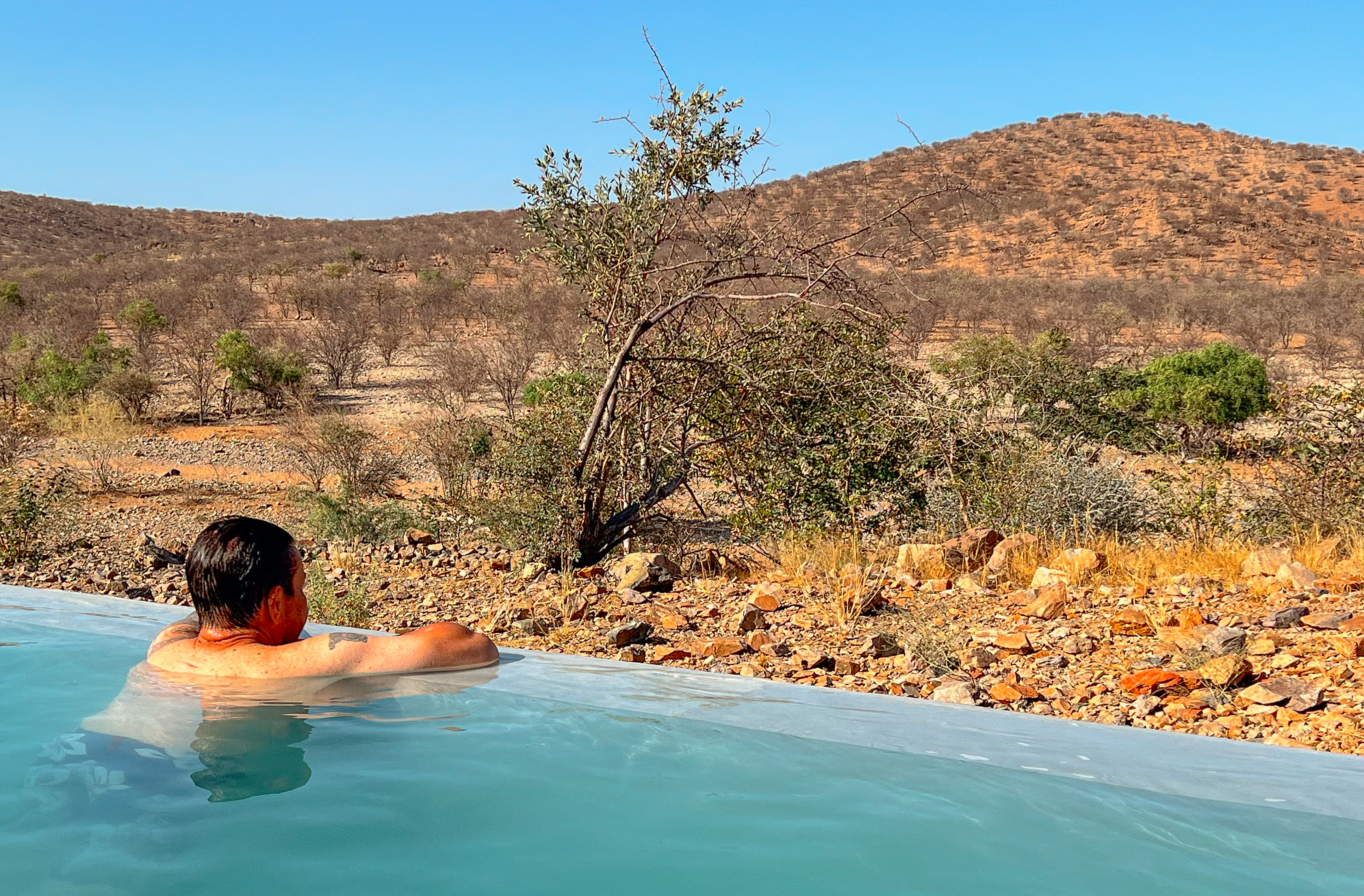
The advantage is depth. The disadvantage is practical: more days require more leave, a larger budget and more time away from home. A longer trip can also become tiring if every additional day is used to add another destination.
Rest does not appear automatically. You still have to make room for it.
Namibia Itinerary Length at a Glance
Use this comparison as a starting point, not a rulebook. The best fit depends on what you want your Namibia experience to feel like.
7–10 days — the focused introduction
- Overall travel pace: fast-paced, drive-heavy days
- Realistic route scope: the classic circuit
- Accommodation rhythm: short stays, frequent moves
- Room for spontaneity: limited
- Impact of long-haul travel: significant share of the trip
- What this length provides: the key highlights
- Main trade-off: more compromises
11–14 days — the itinerary breathes
- Overall travel pace: balanced, regular drives
- Realistic route scope: classic circuit plus Damaraland
- Accommodation rhythm: two-night stays become normal
- Room for spontaneity: increasing
- Impact of long-haul travel: moderate
- What this length provides: better balance
- Main trade-off: selective additions only
15–20 days — more places or more time
- Overall travel pace: unhurried, fewer rushed transitions
- Realistic route scope: one extra region (the south, or deeper northwest)
- Accommodation rhythm: longer stays
- Room for spontaneity: generous
- Impact of long-haul travel: reduced
- What this length provides: greater depth
- Main trade-off: choosing which region
20+ days — leaving room for Namibia
- Overall travel pace: highly flexible
- Realistic route scope: distant regions become realistic
- Accommodation rhythm: extended, three-night stays
- Room for spontaneity: built in
- Impact of long-haul travel: minimal
- What this length provides: full immersion
- Main trade-off: the time commitment itself
So, How Long Should You Spend in Namibia?
Long enough to experience the places that matter to you in the way you want to experience them, without building an itinerary you will resent halfway through.
If you enjoy full days, changing landscapes and the momentum of the road, seven to ten days can be a brilliant introduction. If you prefer longer stays and fewer early departures, 11 to 14 days may suit you better. Between 15 and 20 days, you can explore another region or give more time to the places already on your route. Beyond 20 days, Namibia offers a different kind of freedom.
No single itinerary length is right for everyone. The better question is what you want your seven—or fourteen, or twenty—days to feel like.
Whatever you decide, remember that the drive is often part of the destination. Leave room for the changing landscape, the unexpected wildlife sighting and the roadside coffee break that exists for no reason beyond creating a spontaneous Namibian memory.
If you have seven days, come for seven days. If you have three weeks, wonderful. Just do not wait for the perfect amount of time before visiting.
Namibia will fill the days you give it—and will probably give you several very good reasons to return.
Distances and drive times checked against TripPace route data, August 2026. Flight time and visitor statistics checked August 2026.