How to Plan a Namibia Self-Drive Trip
Most Namibia trips are won or lost before you leave home — here's the order to plan in.
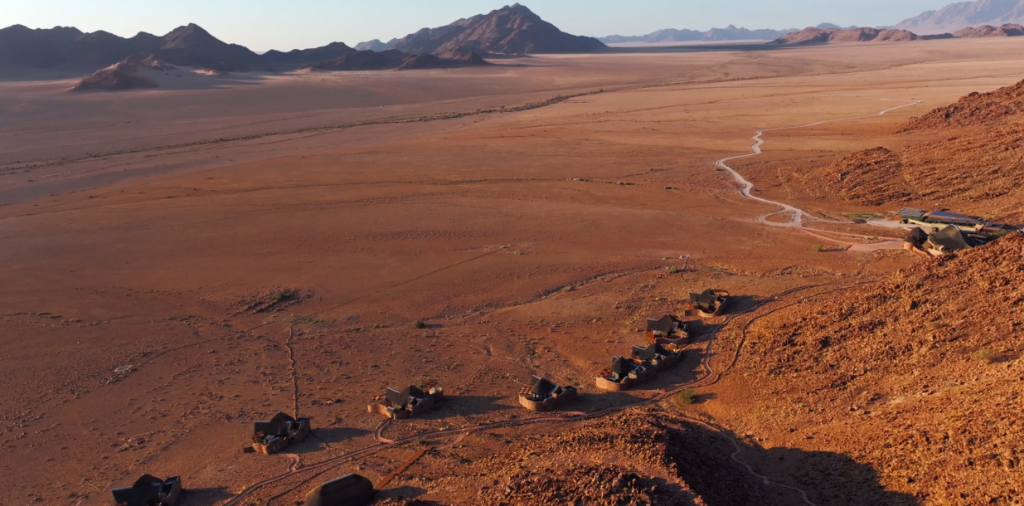
A Namibia self-drive is one of the greatest road trips left on the planet. Empty gravel roads that run dead straight to a mountain you never seem to reach. A dune the colour of fire at first light. A waterhole at sunset with more animals around it than people in the nearest town.
Here's the thing we learned the hard way on our first trip … For Namibia specifically, the trip is mostly decided before you take your seat on the plane. The route you sketch months before is the trip you live. Get the order of planning right, and Namibia rewards you. We found this out the hard way, driving from the Quiver Tree Forest to Luderitz … We were expecting a straightforward 4-hour drive, so we left at 11am… We didn't count on a breakdown, roadside animals, gorgeous scenery, and a few stops on the way … in short, the 4-hour drive took over 8 hours, and we rolled into Luderitz after the sun went down.
This is a guide to assist planning and avoid the pitfalls of a Namibia self-drive trip — the order to do things in, why that order matters, and where each decision builds on the previous. We'll link out to the detailed guides as we go, so think of this page as the map for everything else.
Namibia isn't a book-it-and-go trip
Most two-week holidays are simple. Open Expedia, book the flights, a hotel, a car … You're done. You turn up and it all just works. This isn't Scotland, New Zealand, or Canada … This is one of the least-populated countries on the planet, with an area three times that of Germany.
Namibia doesn't work like that. Here the questions stack up fast: When can you go? When should you go? Which corners of the country do you actually want to see? Where do you stay out there — because the good places aren't in towns? Can you even drive there? And what does the whole thing cost? … And the planning can get overwhelming in a hurry.
But take heart; we've been through every bit of this … we had too many early mornings and too few afternoon pool time sundowners. At TripPace Namibia, our job is to make the planning simple — to walk you through it in order, so your energy and excitement go into the African adventure ahead.
Why Namibia rewards self-drive
You could see Namibia from the back of a guided tour vehicle, and some do. But the country is built for driving yourself: good main roads, light traffic, signposting that mostly makes sense, and distances that may look daunting on a map but feel like freedom from behind the wheel.
Self-drive means you stop when the light is good, not when the schedule says. It means the Oryx crossing the road in front of you is your moment, not a photo from someone else's window. The trade is simple: more freedom, more responsibility. Which is exactly why planning matters more here than almost anywhere.
Plan in this order
Don't plan your Namibia route first — it's a common way of travelling, but Namibia is a little different. Aside from Windhoek, most accommodations are not in towns … in fact, some of the really unique places are highly remote and book out months ahead. In short: your accommodations dictate your itinerary, not the other way around. Lock in your stays first. Once those are secure, map out the connecting roads and select a vehicle that can handle the terrain.
Here's the order that actually works:
- Pick your season (when you go shapes everything).
- Decide your trip length in days.
- Build your budget from real numbers.
- Draft a destination wish list.
- Book accommodation at the places you want to see.
- Plan the specific roads and routes that connect them.
- Decide what type of vehicle you need — 4x4, 2WD, or 4x4 with a rooftop tent?
- Finalise the paperwork (visas, permits, insurance).
- Pressure-test the whole thing before you commit.
The rest of this guide walks through each step in turn.
TRIPPACE TIP: Namibia planning can be a lot — distances, roads, what car do I need, where are the fuel stops, etc … Feel free to use our Trip Planning Tool to help build your dream trip … you bring the desire, we've got the details!
As an aside, this in-depth planning is exactly why we created TripPaceNamibia.com — to help guide travellers through the process in an organised, complete way, so you can confidently look forward to a fantastic and rare experience.
Step 1 — When to go
Namibia has a dry season (roughly May to October) and a green season (roughly November to April). The dry months are the classic window: cooler days, sparse vegetation, and animals at the waterholes more often, where you can see them more easily.
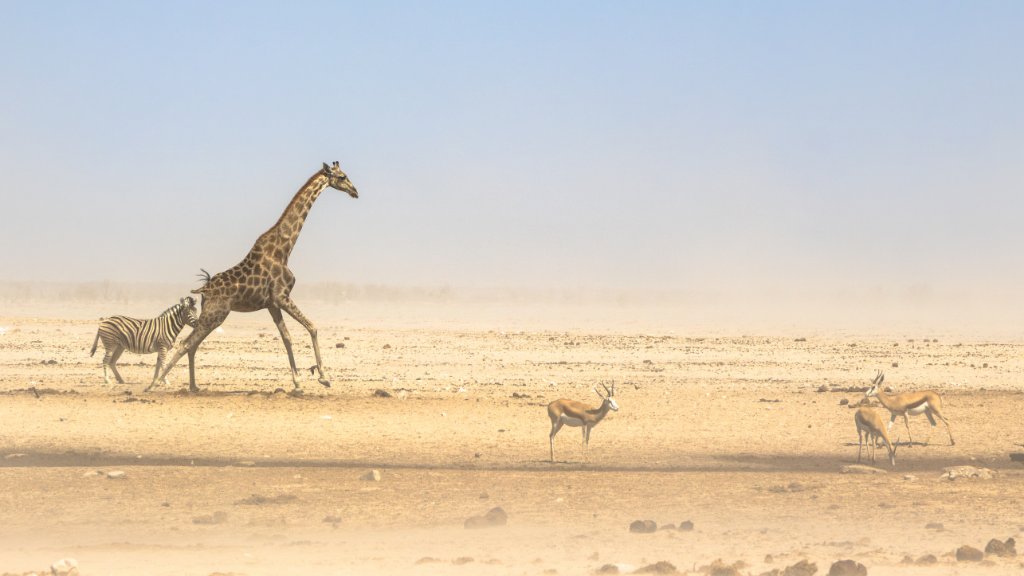
The green season is hotter and wetter, quieter and cheaper, with dramatic skies and newborn wildlife — a different, lovelier trip if you know what you're choosing. Though some lodges and more unique accommodations may be closed during the green season.
The catch: the dry-season sweet spot is also when the best lodges book out first — often many months ahead. So your "when" decides how early you need to start everything else, and how locked in you'll be to specific lodges.
Step 2 — How many days
Don't think in places to tick off. Think in days per region. Namibia is bigger and slower than the map suggests, and the gap between a 10-day trip and a 14-day trip isn't "a bit more" — it's a different trip with a different feel.
As a rough shape: 10 days is a focused highlights run, 14 days is the sweet spot most first-timers want, and 21 days is the unhurried grand tour.
Whatever the length, Namibia rewards a slower pace. A focused 10-day trip that sticks to a few key destinations can be every bit as good as a 21-day immersive one. The biggest warning: don't try to do too much. It's a beautiful country to travel in, but not one you can rush.
Step 3 — Budget
A Namibia self-drive doesn't have to be expensive, but the costs do add up: vehicle, fuel, park fees, lodging and food. How much they add up depends on your choices — vehicle type, camping vs lodges, self-catering vs restaurants — so it's worth planning from real numbers rather than a guess. We pull our figures from primary sources (park-fee schedules, operator rate cards) rather than blog estimates, and keep them date-stamped.
Here's a rough idea of what a high-season trip for two, sharing, over 10 days can cost — grouped by the kind of trip you're planning:
Budget — roughly $2,125–$2,925 per couple
- Vehicle: $950–$1,200 (2WD or small 4x4)
- Accommodation: $450–$750 (camping)
- Food & dining: $200–$300
- Fuel: $175–$225
- Activities & extras: $350–$450
Mid-range — roughly $4,375–$5,925 per couple
- Vehicle: $1,700–$1,900 (full-sized 4x4)
- Accommodation: $1,200–$1,900 (glamping and lodges)
- Food & dining: $500–$700
- Fuel: $175–$225
- Activities & extras: $800–$1,200
High-end — roughly $9,450–$13,850+ per couple
- Vehicle: $2,150–$2,400 (camping-equipped 4x4)
- Accommodation: $4,500–$7,500+ (medium to high-end lodges)
- Food & dining: $900–$1,300
- Fuel: $200–$250
- Activities & extras: $1,700–$2,400
Estimated costs as of March 2026, based on 2 people travelling together, sharing accommodation, for 10 days in high season. Per couple, excludes international flights. Estimate only — may not include all costs. Based on available costs of the 2025 and 2026 high seasons.
Step 4 — Your destination wish list
Before you lock anything down, list the places you most want to see — the dunes, the wildlife, the coast, the quiet corners. This wish list is what the rest of the trip gets built around, so be honest about what would make it for you, and what you'd happily skip. And just as important as where you need to go (Need to Have), it's just as important to figure out where you can miss if possible (Nice to Have). This distinction will become critical when you start to look at times, distances, and destinations.
Step 5 — Accommodation and lead time
With your wish list and dates in hand, start booking. In high season some places go early, so lock accommodation in sooner rather than later. For the busy September–November window, the most sought-after lodges can book out 8–12 months ahead. In fact, one lodge around Sossusvlei commonly books up 18 months out.
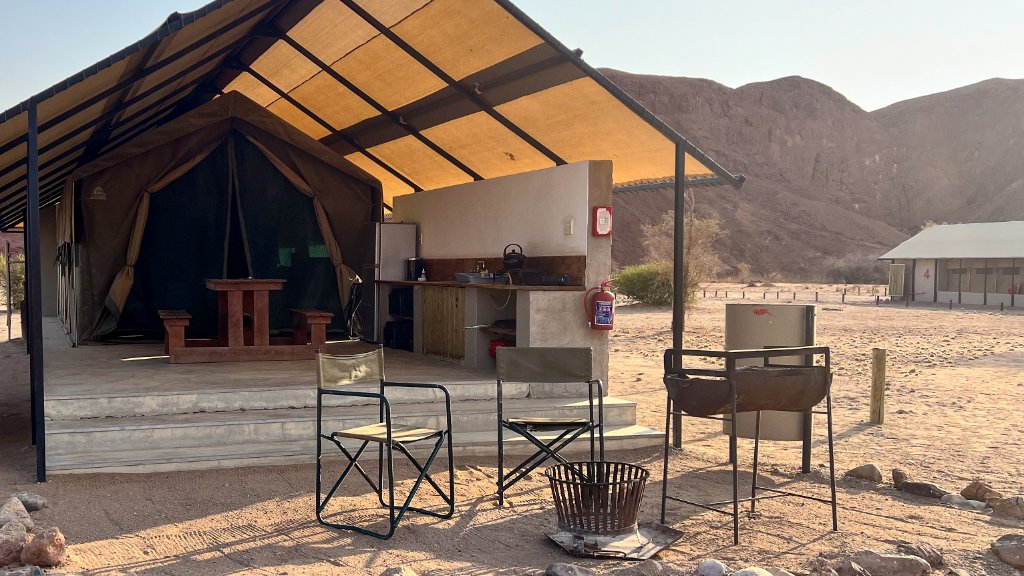
One quiet rule that saves trips: check each lodge's location and gate times (when the main gate or check-in closes) against the day you'll arrive. A beautiful camp you can only reach after dark, down a track your vehicle can't handle, needs to be replanned — earlier departure time, different vehicle, or different camp. And please don't plan to drive more than five or six hours a day, or after dark … more on that in Step 6.
TRIPPACE TIP: If you are staying inside the park at Sesriem (Sossusvlei), you get access to the dunes an hour before the outer main gates open, and get to stay in the park a little longer. If you're outside that park, missing the outer gate closing time at sunset can result in steep fines, so you really need to watch the time if you stay until sunset.
Step 6 — Plan your roads and routes
By now you know your stops and where you're sleeping. This step is about connecting them — and if you remember one thing from this whole guide, make it this: plan in hours, not kilometres.
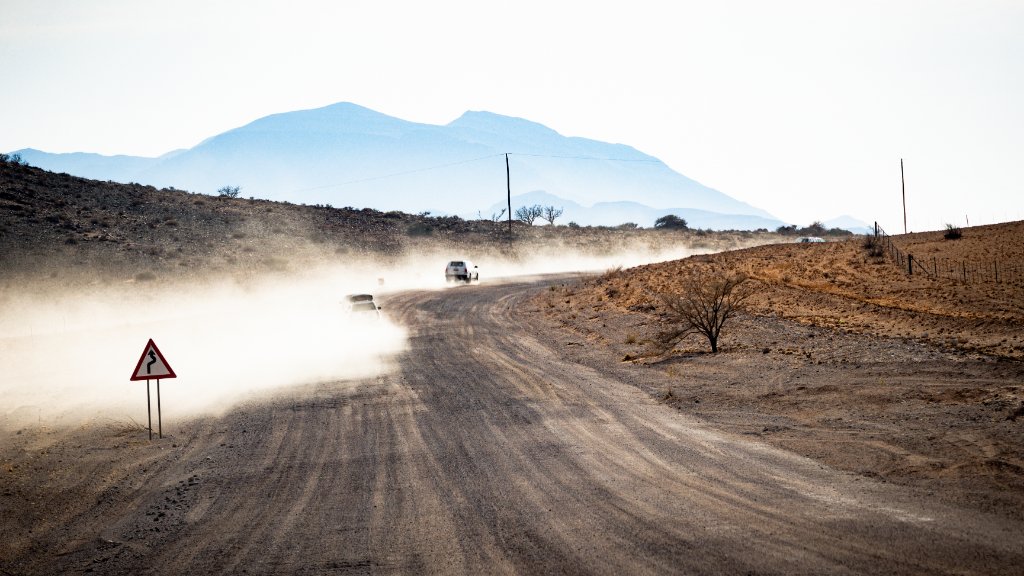
Your mapping app will give you a driving time. In Namibia, that number is often optimistic or just simply wrong. Gravel is slower than tar. Corrugations — the washboard ridges that build up across the road — slow you more. Then add fuel stops that are far apart, photo stops, lodge gates that close at a set hour, park gates with their own rules, and the simple fact that you'll want to stop for lots of things. The four-hour drive on screen can be a six-hour day in reality — and that two-hour gap is exactly how people end up arriving in the dark.
Remember that Namibia's roads are graded by letters. 'B' roads are paved tarmac. 'C' roads are primary gravel roads that vary wildly in quality, and 'D' roads are rough, unpaved tracks where you will absolutely enjoy a bit of extra ground clearance.
So build days you can actually enjoy. Aim to arrive by mid-afternoon, earlier on gravel or with kids. The last hour of light at a Namibian lodge is half the reason you booked it. Relax by the pool, have a sundowner, watch the sun go down — don't plan to spend it driving.
Step 7 — What type of vehicle do you need?
The honest answer isn't yes or no — it's "depends on your route." A lot of the main sights are reachable in a sturdy 2WD on good gravel. Some routes genuinely need a 4x4, and a 4x4 with a rooftop tent opens up camping options others can't reach. The right call falls out of the roads you mapped in Step 6 — which is exactly why you choose the vehicle after the route, not before.
Namibian gravel roads can be taxing, and the better your vehicle's suspension, the more you'll enjoy the drives. Even where the roads are fine for a 2WD, a 4x4 will give you more control and comfort.
Also, check with your rental agency whether comprehensive zero-excess insurance is included in your price or offered as an upgrade — it's a huge weight off either way, but be sure to check!
Zero Excess (Zero Deductible) insurance protects you against damage and theft, and typically covers tyre and glass damage with no security deposit or holding fee required — exact terms vary by operator, so read yours. Because Namibian roads are heavily gravelled, this all-inclusive coverage provides significant peace of mind. However, the zero excess applies unless gross negligence — such as reckless driving or behaviour that is prohibited in your rental contract or breaking traffic laws — is proven.
TRIPPACE TIP: True expertise on these roads also involves managing your tyre pressure. You should deflate your tyres when transitioning from tarmac to gravel to improve grip and prevent punctures. (Your rental company will go over your specific vehicle during the vehicle handoff.) Always check that your rental includes a pressure gauge and a compressor, and that this is all gone over during your initial vehicle handoff with your rental company.
Step 8 — The (dreaded but VERY important) paperwork
Start about 10–12 weeks out (but can be done anytime).
It feels odd to put paperwork at Step 8, but there's a method to it: Namibian visas, along with the other necessary documentation, are relatively easy to obtain. Starting your documentation phase about 10–12 weeks out still gives you plenty of time to get everything you need, and by now your dates are locked in.
First, let's talk about Namibian visas... they can be convoluted... so here's a quick breakdown:
- Are you visiting Namibia as a tourist for 90 days or less and staying in the country the whole time? Then a single-entry visa covers you — depending on your passport, you'll apply online (the eVisa), use Visa on Arrival, or in some cases enter visa-free.
- Are you visiting Namibia as a tourist for 90 days or less but want to leave and come back because, for example, you're visiting Victoria Falls? Then you'll want multiple entries on your visa.
If you have any questions, if neither of the above applies to you, or if you want to do a deep dive into the world of Namibian visas — including official application links — check out our Namibian Visa Guide.
Beyond your visa, you'll need:
- Passport validity – Valid for at least six months beyond your planned departure, with at least three blank pages available. Official sources vary on whether the six months runs from arrival or departure — planning around departure keeps you safe either way.
- A valid driver's license from your home country
- An International Driving Permit – Valid for 12 months and generally straightforward to obtain. Officially, this is only needed if your driver's license isn't in English, but we always bring one just in case!
- Travel health insurance – Must cover your full stay.
- Proof of onward or return travel
- Proof of accommodation – It's a great idea to print out your lodging bookings. Cell service and Wi-Fi can be hard to come by in remote areas, so a hard copy is best.
- Proof of sufficient funds* – Bank statements are the official requirement (see below)
- Optional cross-border letter – Required if you rent a vehicle in Namibia and want to hop into Botswana (can pick up at your rental agency if permitted — need to pre-arrange)
- Optional Yellow Fever vaccination – Only required if you are arriving from, or have transited through, a country with a risk of Yellow Fever.
- CRITICAL if travelling with children: If both parents are travelling with your children under 18 — official copy of the unabridged (long-form) birth certificate showing both parents' names for all children.
- CRITICAL if travelling with children: If one parent is travelling with your children under 18 — the unabridged birth certificate and a formal sworn consent affidavit signed and sealed by a commissioner of oaths or notary for all children, along with a copy of the non-travelling parent's passport or national ID. A court order granting full custody, or the other parent's death certificate, can stand in place of the consent.
*In practice, travellers entering through Hosea Kutako International Airport (Windhoek) report that immigration officers rarely ask for physical bank statements — but they can, and they're most likely to when a traveller arrives without the usual reassurances: pre-booked accommodation, a rental vehicle, or an obvious means of paying their way. Have your bookings printed and a major credit card handy, and the question rarely comes up.
Generally, when you enter Namibia, the primary focus will be on your eVisa/VOA paperwork, passport validity, your landing card, where you are staying, and when you are leaving. Officers will typically only dig deeper if you trigger a "red flag," such as requesting a maximum 90-day stay without having any pre-booked accommodation or a pre-booked rental vehicle to show for it.
Step 9 — Pressure-test it before you fall in love with it
A route can look perfect on paper and still be undriveable in daylight. Before you commit, run it through our free Pace Check: it takes your stops and tells you, honestly, whether the days actually fit — flagging the drives that look fine but land you somewhere after dark.
It's the cheapest insurance on a trip like this, and it's free.
Or if you're hitting a few more remote spots and have specific roads you'd like to drive (like the D707) then our full planner might be a better fit … and it too is currently free — once you have all your details in you can check your route, track your accommodation bookings, see where the fuel stop challenges will be, get estimated driving departure and arrival times, packing lists, and more … and did we mention it's free?
The behaviours that can affect a trip
Almost every Namibia planning regret traces back to the same handful of slips:
- Over-driving — too many kilometres crammed into too few days.
- Trusting app drive times on gravel.
- Forgetting park and lodge gate hours.
- Underestimating fuel gaps (refuel at half a tank, not empty).
- Too many one-night stops, so the trip becomes a commute.
- Planning the route in the abstract, before your stops and stays are locked.
Plan in the order above and most of these never get the chance to happen.
Our first trip to Namibia had a number of challenges in it, all of which we created by not adapting to Namibia… a ten-hour drive day, back-to-back-to-back single-night stays, multiple early-morning departures … Namibia's immense beauty almost feels infectious, meaning you don't need to try to see and do everything in one trip because like a lot of travellers you'll probably go back … As a matter of fact, we started planning the follow-up trip to our initial Namibian adventure on our flight home.
If we can give you one piece of advice that we realized part way through our first trip...
Stop. Stop in random places. Pull over, and lean on your vehicle, take a sip of water or tea or coffee and let Namibia wash over you. Embrace the vastness, the quiet, the wind … Don't let the windshield and a seemingly unbending itinerary stand between you and unplanned beautiful memories.
Frequently asked questions
How far ahead should I plan a Namibia self-drive trip?
For dry-season travel, start early — as mentioned above, the best lodges can book out many months ahead. Sossusvlei is the tightest: for the September–November period it tends to fill closer to a year out, and one standout lodge takes bookings as much as two years ahead. So once your dates and destinations are firm, secure accommodation sooner rather than later. Green-season trips give you more flexibility, but some remote or smaller accommodations may close during this period.
Is Namibia good for first-time self-drivers?
Yes — it's one of the more approachable countries to self-drive, with good main roads and light traffic. The learning curve is the gravel and the distances, both of which come down to sensible pacing.
How long does planning take?
The decisions matter more than the hours. Work through the order in this guide, lean on the detailed posts for specifics, and pressure-test the result — you can have a solid plan in an evening or two ... But don't aim to complete it in an evening or two as Namibia has so much to offer that you'll probably tweak portions a few times.
Do I need a 4x4?
It depends entirely on your route. Many highlights are fine in a good 2WD on gravel; some routes need a 4x4. Decide after you've drafted the route — our dedicated 4x4 guide breaks it down route-by-route.
We took, and will always take, a 4x4 … the comfort, better road handling, and freedom to adjust our route no matter what the road conditions are is why we will always choose a 4x4 … but that's just us. You should make up your own mind.
Namibia Self-Drive Safety
What is the single biggest safety hazard when self-driving in Namibia?
The primary risk is vehicle accidents caused by speeding on loose gravel roads, sudden tire punctures, or hitting large wildlife wandering onto unlit roads at dusk. General crime rates against tourists are very low.
Is it safe to drive at night outside of major Namibian towns?
No, driving after dark outside urban boundaries is highly dangerous and explicitly discouraged by all local rental agencies due to severe visual hazards from free-roaming wildlife. Please read our essential Namibia Tips and Tricks to learn more about safely navigating these remote routes.
Can I safely rely on standard Google Maps for driving timelines in Namibia?
No. Google Maps routinely underestimates travel durations because it fails to calculate real-world slowdowns on rough "C" and "D" gravel roads. You should plug your stops into our free TripPace Route Planner to calculate realistic, gravel-adjusted drive times and avoid getting locked out by sunset park gates.