Our solitary dust trail: what Namibia taught us about being small
Why Namibia? Here's the honest answer — the one that hit us three hours into our first road trip.
There was a specific thought that hit us about three hours into our first Namibian road trip.
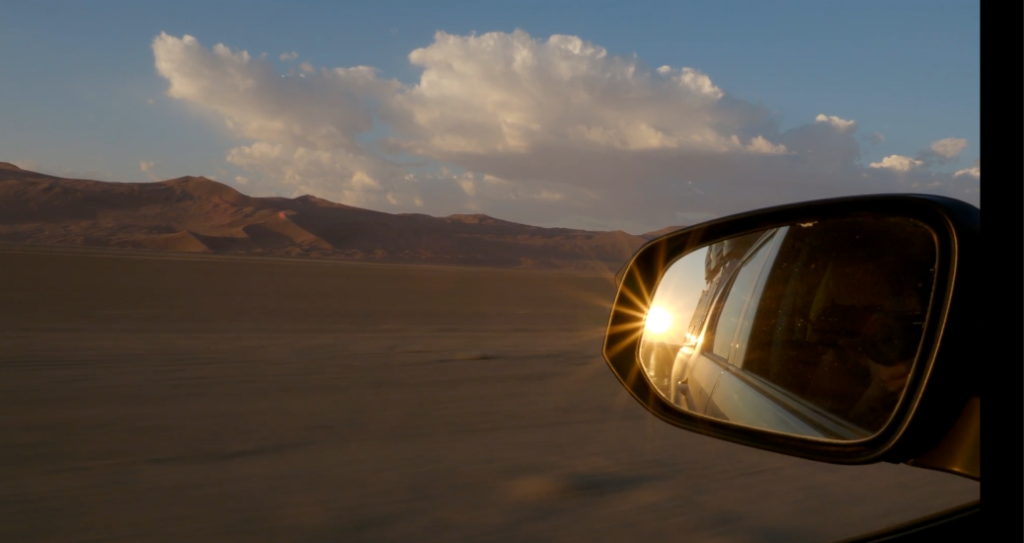
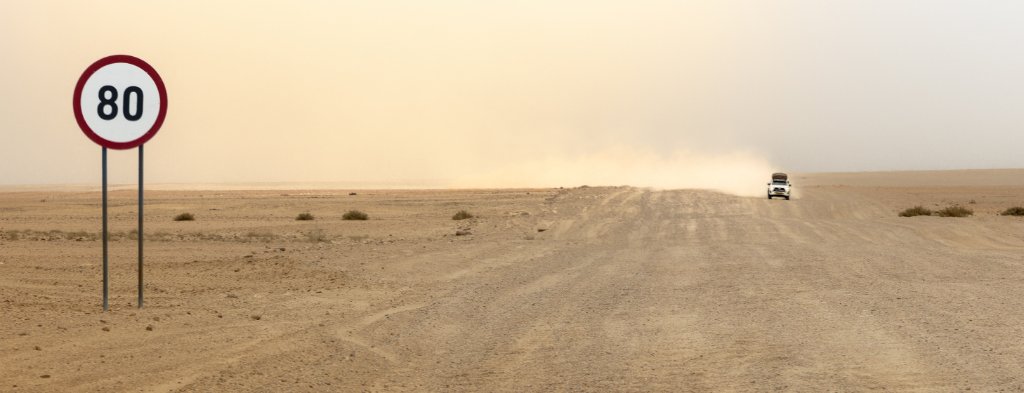
We were on a long, unpaved ribbon of C-road — I think it was the C14, on the way to Solitaire — and we looked in the rearview mirrors. We couldn't see the road behind us; there was only a massive, white, hazy wall of our own dust. Ahead, the gravel stretched straight into a horizon that didn't seem to end. No power lines, spotty broken fences, statuesque lonely windmills, no bars on our phones. Just the constant, rhythmic washboard rattle of a rented 4x4. That was the moment the reality of where we were sank in.
Namibia isn't a country to look at through a tour-bus window. It's a country that gets in your teeth — literally. By day three my hair felt like straw, our camera lenses demanded regular cleaning, and I had a bruise on my knee from bouncing against the door panel. But that is exactly the point of Namibia. It reset our perspective on how vast, beautifully indifferent, and unspoilt this wild world can be — if you're willing to take the adventure on.
Sossusvlei, before sunrise
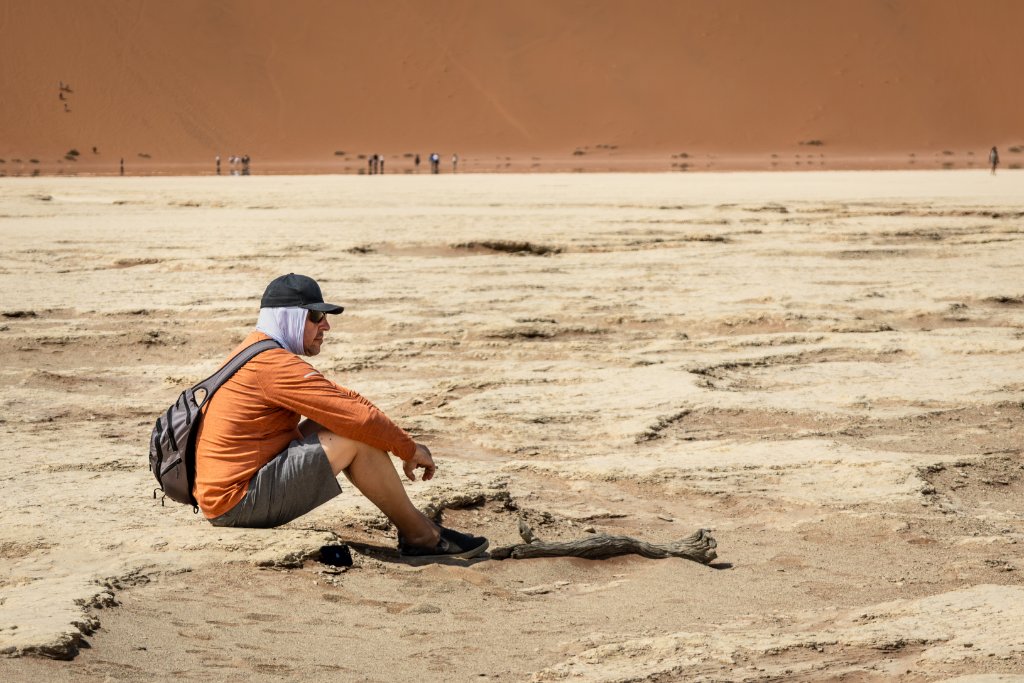
Everyone goes to Sossusvlei for the sunrise, and we did too. We woke at 4:30 AM, stumbling around in the dark trying to boil water for a cup of marginal instant coffee (not being a morning person, this one was rough on me). But walking into Deadvlei a few hours later makes you forget the fatigue, the morning chill, the truly marginal coffee. It's a white clay pan trapped between impossibly high, glowing orange dunes. The morning sun throws shadows cascading down the sand, and the whole place feels otherworldly. Scattered across the pan are 900-year-old dead trees, blackened by the sun, that look almost like the claws of some long-buried creature reaching for the sky. The scene doesn't look like earth; it looks like a surrealist painting you've accidentally walked into. I remember just sitting on the ground, completely silent, listening to nothing but the wind whistling across the dunes, letting it wash over me.
The emptiness is a physical presence
Namibia is the second least densely populated country on earth — after Mongolia — and you feel it the moment you leave Windhoek. Driving becomes active, otherworldly, and, at times, exhausting. You aren't commuting; you're challenging yourselves: managing the corrugation (keep your speed reasonable), scanning the shoulders for baboons, oryx, and jackal (more common than you'd think), and really hoping you don't shred a tyre on a sharp piece of quartz (also, regrettably, more common than you'd think). You can — and will — drive four hours without seeing another soul, watching the savannah give way to rocky passes and shifting desert plains. In the passenger seat your thoughts drift, caught up in the tranquillity and the scenery, only to snap back at the sudden call of "Look — ostrich!"
When the wildlife finally comes
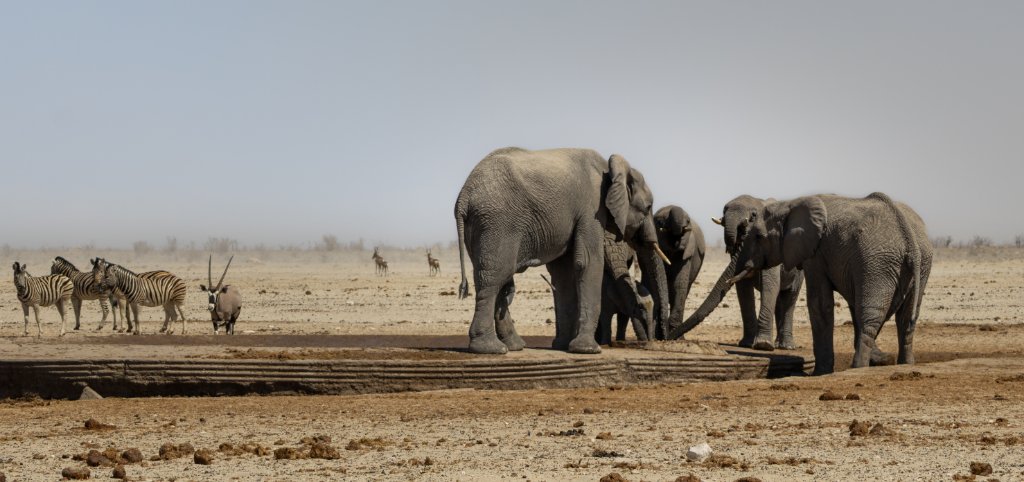
When you do finally see Namibia's famous wildlife, it hits differently than a standard safari. In Etosha the landscape is dominated by a salt pan so massive it looks like a frozen white ocean (for scale, Etosha is about the size of El Salvador — roughly half of Denmark or Switzerland). In the dry season the waterholes are extraordinarily active. We sat in our vehicle for two hours one afternoon just watching the unspoken hierarchy: herds of zebra and springbok drinking, wreathed in flocks of darting birds; the slow march of giraffe, to which the zebra and springbok quietly gave way; a lone jackal skittering about for an easy meal — and then, in an instant, all of it shifting as a family herd of more than a dozen elephants moved in like they owned the place, kicking up dust as the calves, surrounded by the older members, splashed in the mud.
A country of contradictions
Namibia is a strange, beautiful contradiction of histories. One day you're in the remote northwest, passing semi-nomadic Himba people who still live in traditional villages, their skin gleaming red with otjize paste against the brutal sun. The next, you pull into Swakopmund on the coast, wrapped in a thick, eerie Atlantic fog, eating German apple strudel in a bakery surrounded by architecture that could pass for a quaint German town. The country's history is heavy, complicated, and fascinating.
The sky's backbone
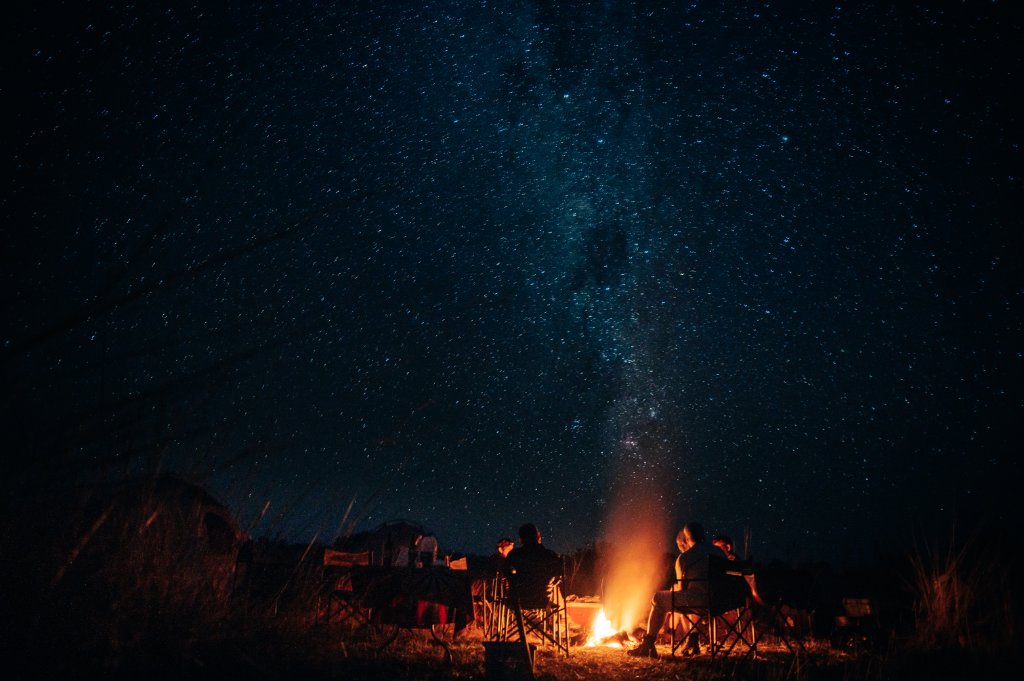
At night the world changes completely. We camped in many places, each with its own character, but at night they all shared the same extraordinary light show. With virtually no light pollution, Namibia's night sky is like nothing you've likely seen — a full moon almost too bright to look at. You don't need a telescope; you just lie on your back on the roof of the truck with a cold drink and look up at a Milky Way so vivid you understand why the San people called it the "Sky's Backbone" — a celestial column of light holding up the cosmos.
The long road back
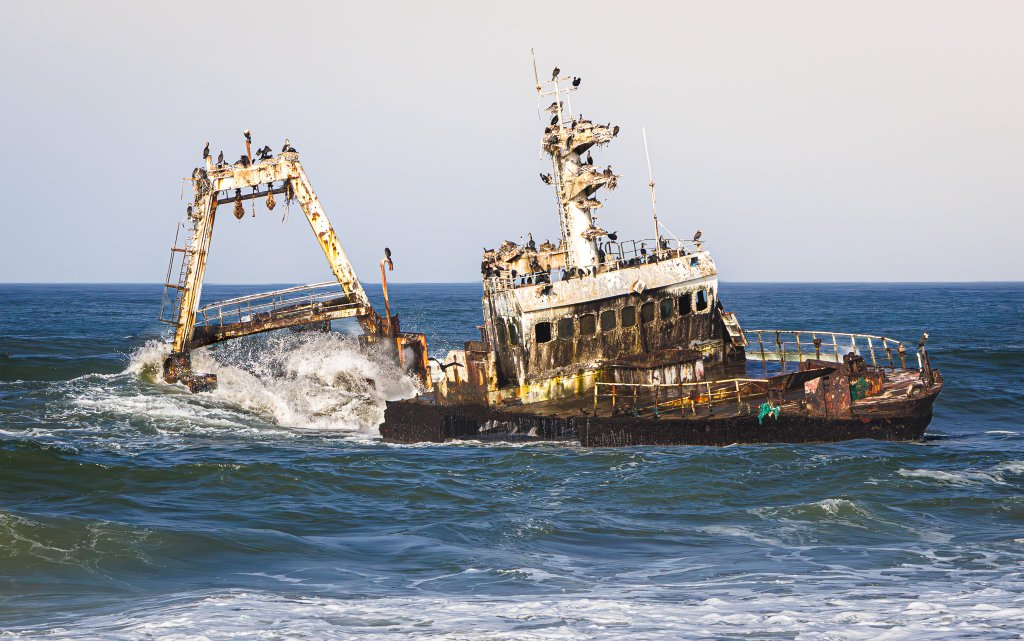
By the time we reached the Skeleton Coast — where the cold Atlantic slams into the desert, leaving rusting shipwrecks to be swallowed by the dunes — my hands were tingling from a steering wheel that had barely stopped vibrating for days. The vehicle looked ten years older than when we picked it up under its coat of dust, our clothes smelled of campfire smoke, and we'd well and truly fallen for the local food and cooking — something about kapana grilled over an open hardwood fire as the setting sun lights the sky in oranges, yellows, and reds.
Namibia takes a bit of grit. It asks you to be okay with discomfort, with isolation, and with the realisation of how small you actually are. But when you finally hand back the keys to that road-weary, dust-covered 4x4 — a relaxed smile spreading across a relaxed, maybe lightly sunburned face — you realise you've tasted a raw, untamed freedom that's slowly disappearing from the rest of the planet.
And if you're anything like us, you'll start planning your next visit before you even board the flight home.
When you're ready to plan yours, our free Pace Check makes sure your route actually works on Namibian roads — before you book a thing.
Is a Namibia Road Trip Right for You?
What makes a self-drive trip through Namibia unique compared to a standard African safari?
Unlike a traditional safari where you sit in a guided tour bus, Namibia offers an untamed sense of freedom where you actively drive yourself through massive, changing landscapes. From watching wildlife interact at the Etosha salt pan to navigating remote desert mountain passes completely alone, it challenges you to embrace isolation and self-sufficiency.
How physically demanding is a self-drive holiday in Namibia?
Namibia requires a bit of grit and a willingness to step outside your comfort zone. You will experience long driving hours on heavily corrugated gravel roads, dust that penetrates your clothing and camera gear, and dramatic desert temperature shifts. To ensure your daily travel sections remain manageable and don’t lead to exhaustion, plan your route buffers ahead of time using our TripPace Route Planner.
What is the best way to experience Namibia’s remote scenery and famous night skies?
Roof-top camping with a rugged 4x4 vehicle is the ultimate way to experience Namibia’s total lack of light pollution and exceptional nighttime views. Cooking local Kapana over an open hardwood campfire and sleeping under a brilliant Milky Way offers a raw connection to the desert. For essential safety rules and packing advice for your camping journey, read through our Namibia Tips and Tricks guide.